
Rural Places, Rural Voices: The Development of a Rural and Island Place Standard
Written by Kelly Clapperton, Community Project Officer, Forth Valley Climate Action Hub
The Scottish Government’s Place Standard is a key place-planning tool for consulting Scottish communities. Its 14 themes help communities engage holistically with their places and spaces, with questions on public transport, safety, belonging, traffic and parking, and housing. It is central to developing Local Place Plans, which allow communities to play a proactive role in the planning process and how land should be used. The data gathered from the Place Standard tool can inform other community-led plans, including community action and resilience plans.
I have been using the Place Standard with communities across the Loch Lomond and Trossachs National Park since 2017. Although it is a fantastic tool, it has its limitations when working with rural communities. The language used is very urban centric, and the questions are framed in ways that do not capture the realities of life and day-to-day issues in rural communities. I found myself tweaking the original questions and ultimately developing a ‘rural version’. Discovering that the Place Standard felt unrepresentative for multiple rural communities across Scotland, in 2022 the Loch Lomond and Trossachs National Park Authority (NPA) and I approached Public Health Scotland (PHS) to explore the potential of creating a Rural Place Standard. We established a Working Group comprising myself and representatives from PHS, Scottish Rural Action, Glasgow City Council, the NPA, and South Ayrshire Council.
Over the following three years we redeveloped the original Place Standard into a version suitable for rural and island communities across Scotland.
When I joined FEL Scotland in 2024 as a Project Officer for the Forth Valley Climate Action Hub (FVCAH), I brought this groundbreaking project with me.
By the end of autumn 2025, the Working Group felt that our new version, called the Rural and Island Place Standard, was ready to be released into the world. It was trialed by Coll Community Council, using data gathered through the traditional Place Standard, and requested by communities in Shetland. Early results suggested that it was workable and the data better reflected the rural communities it was designed for.
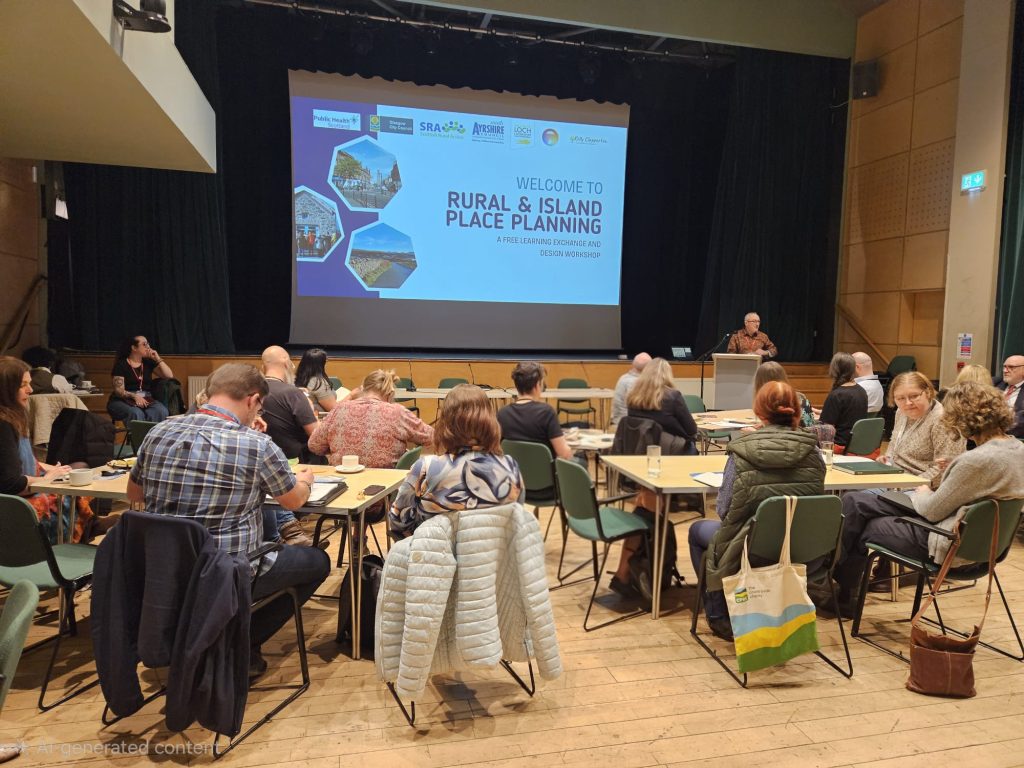
In February 2026, we launched the draft Rural and Island Place Standard at Birnam Arts Centre in Dunkeld. With speakers from the Working Group, Planning Aid Scotland, SRA, PHS, consultants and community groups, the launch event attracted over 100 attendees. Delegates came from across the UK and Ireland; providing a fantastic opportunity to showcase this new version and obtain initial feedback.
The Rural and Island Place Standard Working Group is now looking for funding and support to pilot this new and exciting version. Going forwards, FEL Scotland plans to use the Rural and Island Place Standard to support our rural communities in place-based planning.
Kelly Clapperton, Community Project Officer, Forth Valley Climate Action Hub
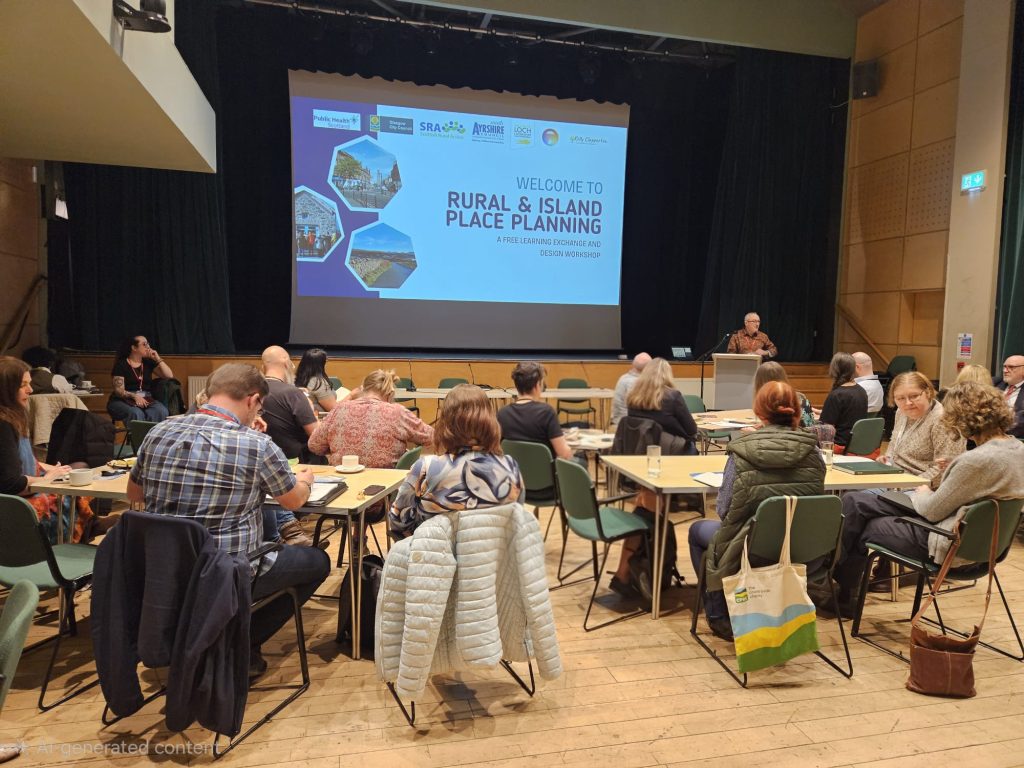
Sam Whitmore from Public Health Scotland Introducing the Rural and Island Place Standard at the launch event at Birnam Arts Centre in February 2026


