
Climate Change Writing Competition 2026: The Power of Storytelling in the Climate Crisis
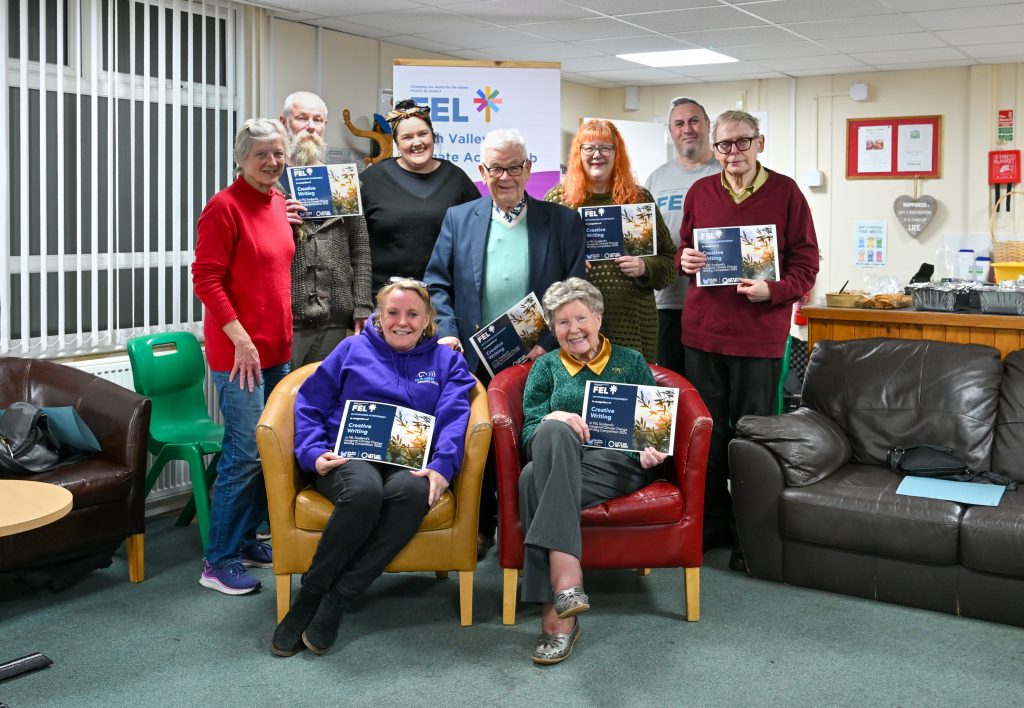
On 24th February, writers, friends and supporters gathered for the award ceremony of the very first Climate Change Writing Competition, hosted by FEL Scotland’s Forth Valley Climate Action Hub and run in partnership with Falkirk Writers’ Circle.
The 2026 Climate Change Writing Competition aimed to give people across the Forth Valley the chance to explore climate change through a combination of storytelling, imagination and lived experience. Stories are one of the most fundamental ways we understand and interact with the world, and according to Climate Outreach, relatable human stories can help shift climate change from a scientific to a social reality. By connecting others to the climate crisis and imagining different possibilities for the future, writing about climate change is one of the ways that real change can start.
The judging panel was made up of representatives from NatureScot, FEL Scotland and Falkirk Council Climate team. The judges were thrilled to receive ten brilliant entries, each offering a different take on how climate change is shaping our world and our communities, and how we can handle the challenges that these changes will bring. The judging panel was also especially pleased to receive an entry from Forth Valley Sensory Centre, highlighting the importance of making space for all voices in the climate conversation.
The judges had a hard time choosing a winner from all the wonderful pieces of work, but eventually decided on ‘Surge’ by Tom Markie.
Tom Markie’s piece stood out for its moving portrayal of a community adapting to rising water levels in Blackness, Scotland. The story delicately navigated the devasting impacts of climate change on the narrator’s local landscape, while also examining the community’s resilience in working together when faced with change.
As the first competition of its kind from FEL Scotland, the award evening felt like the start of something special. Every writer received a Certificate of Merit as a thank you for sharing their creative work. Various participants stood up to read their pieces on the night, and the wonderful stories and good food helped make the occasion a lovely evening for all involved.
Congratulations – and a big thank you again – to our ten writers who took part in the competition! We’re hoping to make this an annual writing competition across the Forth Valley, encouraging more people to use their imagination as a way to explore the possibilities of climate action. Here’s to changing the narrative around climate change with storytelling!
You can read through all ten of the entries to the competition on our next blog post, and find the winning entry of the 2026 Climate Change Writing Competition below:
Surge by Tom Markie
She’d been standing in her kitchen in Shore Road, Blackness. It was still labelled that on maps, even though every year there was less shore. Doing the dishes, hearing birdsong.
Roaring, grating. Stone striking water, stone crunching stone.
Not a tidal wave crashing down that she had seen happen elsewhere on tv.
It only took the time for her to reach the front window for the road along the water, the road she’d walked to school on, the road visitors once drove with windows down to smell the fresh air, to be transformed into a grey shadow under murky water.
The sea wall had collapsed.
That was 2032. The breach became the benchmark against which she measured her life.
In 2046, Catherine walked the new path behind the waterfront houses. The local authority had designated it “Residents Only.”. Where the road used to be there was sea.
She passed the backs of the old shorefront cottages. Their front doors opening onto a new sea wall holding back tidal water. In West Terrace where there had never been a sea wall, houses were uninhabited, windows boarded.
Two houses had been lifted onto concrete and steel stilts.
The Quigley’s house lay empty. They’d moved inland after the second winter flood, rehoused in a new estate on higher ground near Bo’ness. Catherine sometimes pictured Mrs Quigley hanging out washing.
“Morning, Catherine!” called Tam from his garden gate, though the garden was a shadow of its former self. Half of it had become overrun with shingle.
“Morning,” she said, pausing. He held his mobile, studying the screen.
“No reception again.”
She smiled compassionately. “You can use my satellite phone.”
The electricity and fibre optic cables had been raised after the breach. The mobile phone signal still fluctuated with the weather. The satellite dish on her roof, something once only remote communities needed was the new normal.
“Pub open tonight?” she asked.
“Half six ‘til nine. If the van makes it to the car park.”
The car park. The farmer’s field up the hill, cleared, levelled and tarmacked after much of the village became inaccessible. Cars, buses, delivery vans and lorries stopped there now. Supplies came down to the village in robust four-wheel drive vehicles. People were transported between the car park and the edge of the village in them also. The villagers had accepted that this was the only option. Groceries, kegs of beer, containers of gas and kerosene transported through what used to be farmland.
Catherine carried on, the path rising slightly. From here she could see the Forth and flood barriers. Intrusive memories of the debates and arguments: cost, environmental impact. After the surges started, the government had no choice. Dunmore had vanished. Leith needed a barrier. Grangemouth needed one too. A barrier between North and South Queensferry hadn’t been viable. Blackness had to make do with a strengthened sea wall.
She worked three days a week, remotely, processing coastal erosion and tide data for an Edinburgh University research project. Twenty years ago, she’d commuted into the city by car through heavy traffic. Today she logged on from her home office, the sea visible through the side window at high tide. She was fortunate. He still had her job. The monitoring of climate change was critical.
The sense of loss lingered within her. She didn’t suffer from anxiety, depression and trauma the way others had. Writing helped her manage her feelings and experiences.
Blackness Castle at the end of Shore Road had closed in 2038 after the rising Forth had made its foundations unsafe. Scaffolding supported its walls for years. The last time she’d walked up there before the gates shut, she touched the ancient stone and hoped it would endure. Now it stood empty, a ruin the few tourists that came photographed from the high-level car park.
The John Muir Way had been rerouted inland on the Blackness to Bo’ness section. The castle shop that sold tickets, coffees and souvenirs closed. The former barracks and custodian’s house became storage for sandbags, but had to close.
The pub in the village square survived, the people who were left eager to meet for social interaction. Her book group in Edinburgh and writers circle in Falkirk had moved online. She still wrote every day. She missed the in-person meetings.
That evening Catherine went to the pub, as she did most Fridays. The solar path lamps came to life at dusk. Inside, the pub smelled damp. Half the tables were stacked, the blackboard listing just three drinks: Lager; Whisky; Irn Bru.
“Good to see you,” said Rosie behind the bar, passing her a pint.
“Delivery arrived, then?”
“Two kegs and a box of crisps. You’re in luck.”
They laughed. if you didn’t laugh, you’d cry. She cried at random moments. The time she found an old bus ticket to Linlithgow in a coat pocket, printed with a route number that changed years ago.
At the corner table, a couple she didn’t recognise studied a map.
“Walkers,” Rosie whispered. “Doing the entire route.”
“Good luck with that.” Catherine thought.
Later, walking home in the moonlight, she went to the end of the old road. At low tide it was still visible under the water. She stood, hands in gloves, listening.
The Forth sounded familiar, comforting. Waves lapping. The same sound that had lulled her to sleep as a child, that had serenaded her teenage romances, that had carried into her kitchen the morning everything changed.
She still grieved for absent neighbours, for locked castle gates, for a world that had changed irrevocably. But there was something stronger. A comforting sense of being at home.
It remained the place she loved. Smaller. Besieged by water. Quieter. But when Tam waved, when Rosie served her a pint, when the path lights blinked on one by one across a field that used to raise cows and sheep, she felt it: a community damaged but not washed away.
The sea had taken the road.
It hadn’t taken them.


